What Is Strength Training for Moms?
Strength training for moms is resistance training designed for real constraints: limited time, interrupted sleep, unpredictable schedules, and variable recovery. The goal is to keep progressive overload alive without relying on a perfect week.
The goal is not to train like your calendar is empty. The goal is to build a plan that still works when a kid gets sick, sleep falls apart, dinner runs late, or your energy is not where you hoped it would be.
That means your plan needs structure, but it also needs flexibility. You need enough consistency to make progress and enough room to adjust without feeling like one missed workout ruined the week.
The Muscle Mommy Playbook is simple: train 3-4 days per week when possible, prioritize high-return compound lifts, use minimum-effective-dose workouts during chaotic weeks, and track performance trends without guilt.
You are not trying to win every single day. You are trying to build a body, a habit, and a system that can survive the actual season of life you are in.
3 days
A 3-day plan gives you enough weekly stimulus with room for schedule changes.
4 days
A 4-day plan works well when recovery and time are more predictable.
Repeatable
The best plan is the one you can run during a normal messy week.
Why Do Normal Workout Plans Fail Moms?
Normal workout plans fail moms because they assume predictable recovery. They assume you can sleep, eat, train, and recover on schedule. That is not always how real life works.
A 5-6 day bodybuilding split can look perfect on paper and still fail by Wednesday. If each missed session breaks the sequence, the plan becomes fragile. A fragile plan creates guilt instead of momentum.
The second problem is all-or-nothing thinking. You miss Monday, so you skip Tuesday. You cut a workout short, so you call the week a failure. You train tired, performance drops, and you assume you are going backward.
The third problem is using effort as the only proof of value. Hard work matters, but a useful plan does not need to destroy you. You need the right amount of work, repeated often enough, with enough recovery to adapt.
A better plan gives you a main version and a fallback version. On good weeks, you run the full plan. On hard weeks, you hit the minimum effective dose and keep the habit alive.
5-6 days
High-frequency plans can work, but they break easily when life interrupts.
3-4 days
Fewer sessions are easier to protect and easier to reschedule.
20 min
A short session can preserve momentum when the full plan is not realistic.
How Many Days per Week Should Moms Lift?
Most moms who want to build muscle should lift 3-4 days per week. That range gives you enough training frequency to build momentum without making the plan so demanding that one bad night ruins the week.
A 3-day plan is the best starting point if your schedule is unpredictable. It gives you full-body or upper/lower/full-body options, keeps recovery manageable, and leaves open days for walking, conditioning, mobility, or just life.
A 4-day plan is useful if you have more predictable time and want more volume per muscle group. It can be built as upper/lower, push/pull/lower/full-body, or glutes/lower/upper/full-body depending on your goals.
You do not need 6 training days to look strong. You need enough quality sets, enough progression, enough food, and enough recovery to repeat the work. More days only help if they improve the weekly training signal.
The right number of days is the number you can complete at least 80% of the time. If a plan looks impressive but you only complete half of it, it is not your plan yet.
3 days
Best for unpredictable weeks, newer lifters, or limited recovery.
4 days
Best when you can recover and want more weekly volume.
80%
Choose a plan you can complete most weeks, not just ideal weeks.
What Is the Best 3-Day Strength Plan for Moms?
The best 3-day strength plan for moms is a full-body plan built around repeatable compound lifts, simple progression, and short accessory work. Each session should train lower body, upper body, and core or trunk control.
Day 1 can focus on squat, horizontal push, and row. Day 2 can focus on hinge, vertical push, and pull. Day 3 can focus on single-leg work, glutes, upper-body volume, and carries or core work.
A practical session might include 3-5 exercises. Start with one main lift, add two supportive lifts, then finish with one or two accessories. You do not need twelve movements. You need the right movements performed with enough quality to track.
Use progression that does not require perfect weeks. A reps-first system works well. Keep the load the same until you hit the top of the rep range on all working sets, then add a small amount of weight next time.
For example, if goblet squats are programmed for 3×8-12, stay with the same weight until you can complete 12 reps on all 3 sets with clean form. Then increase load and build again.
3-5 moves
Enough work to build strength without turning every workout into a marathon.
1 per day
Anchor each session around one priority lift or movement pattern.
8-12
A simple hypertrophy range that works well for reps-first progression.
What Should You Do When You Only Have 20 Minutes?
When you only have 20 minutes, use a minimum-effective-dose workout. That means you keep the most important stimulus and remove everything that is optional.
Start with one lower-body movement and one upper-body movement. Pair them if the gym setup allows it. For example: Romanian deadlift plus dumbbell press, goblet squat plus cable row, hip thrust plus pulldown, or split squat plus incline press.
Use 2-3 hard sets per movement. Keep rest long enough to maintain good reps, but do not scroll between sets. The goal is not to make the workout feel chaotic. The goal is to capture enough high-quality work to keep the week alive.
If you have 5 extra minutes, add one high-value accessory. Choose the movement that best supports your goal: lateral raises for shoulders, hamstring curls for legs, cable crunches for trunk, curls or triceps extensions for arms, or hip abduction for glutes.
Do not treat the short version like a failure. The short version is the reason the plan survives. A 20-minute workout can preserve the habit, maintain the training signal, and keep you from falling into all-or-nothing thinking.
20 min
Enough time for two priority movements and focused working sets.
2-3
Use one lower-body lift, one upper-body lift, and one optional accessory.
2-3
Hard working sets matter more than a long exercise list.
How Do You Track Progress Without Guilt?
Track progress without guilt by separating data from judgment. A missed workout is information. A lower-energy session is information. A week with less volume is information. None of those things need to become a character assessment.
Your main tracking fields should be simple: workouts completed, exercises, sets, reps, load, RPE, and one short note when life affected performance. That is enough to see whether your plan is working without turning the log into a confession booth.
Use trends instead of single-session reactions. If your lifts are moving up across several weeks, keep going. If your performance is stable while sleep is poor, that may still be a win. If your workouts keep getting missed, the plan needs to shrink before your motivation takes the blame.
Track consistency as a range, not a pass-fail test. A 3-day plan does not become useless because you hit 2 days during a hard week. It becomes useful because it shows you what is realistic and where to adjust.
The best tracking system makes you more honest and less dramatic. You do not need guilt to improve. You need feedback you can use next week.
Sets + reps
Log enough performance data to compare sessions.
RPE
Effort helps explain why the same workout felt different.
Consistency
Workout completion shows whether the plan fits your life.
How Should Moms Support Strength Training With Nutrition and Recovery?
Support strength training with enough protein, enough total food, enough hydration, and realistic recovery expectations. You do not need a perfect diet to build muscle, but you do need enough resources to recover from hard training.
Protein should be a daily anchor. If your goal is muscle growth, strength, or body composition, each day should include repeatable protein sources that fit your schedule. Keep it boring if boring works.
Carbs are useful because training is not powered by vibes. If hard sessions feel flat, look at your meals before you blame your discipline. A pre-workout meal or snack with protein and carbohydrates can make a major difference in session quality.
Recovery also needs to be interpreted honestly. If sleep is interrupted, stress is high, and your schedule is packed, you may need fewer sets, fewer grinders, or more rest between hard sessions. That is not weakness. That is load management.
If you are pregnant, newly postpartum, recovering from birth, managing pelvic floor symptoms, or returning after a C-section, your training needs more individual guidance. Get clearance from your clinician and consider a pelvic floor physical therapist before pushing heavy loading, impact, or intense core work.
1.6g/kg+
A useful anchor for many active lifters building or preserving muscle.
Protein + carbs
Useful before demanding sessions when energy is low.
Volume
Reduce sets before assuming you need a completely different plan.
What Is the Bottom Line for Moms Who Lift?
This playbook is not about doing everything; it is about doing the high-return work consistently enough to build strength and muscle in real life. Progress comes from repeatable systems, not perfect weeks.
Start with 3 days per week. Move to 4 days if your schedule and recovery support it. Prioritize compound lifts, use short fallback sessions when needed, and track your performance without turning missed workouts into guilt.
Your plan should have a full version and a minimum version. The full version builds momentum when the week is smooth. The minimum version protects the habit when the week is messy.
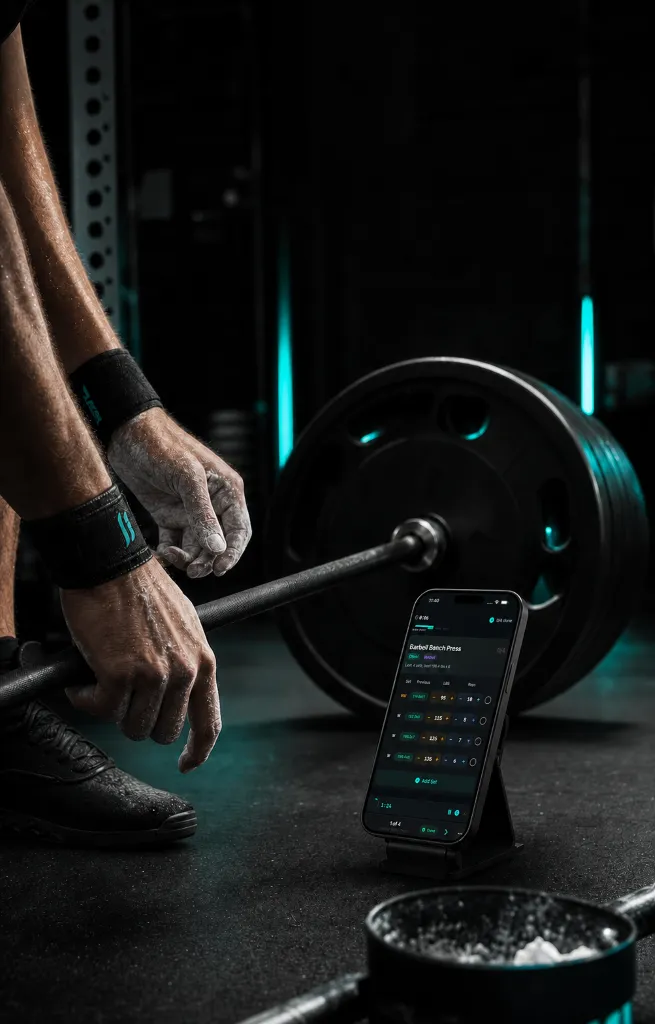
SuperFlex is built for this kind of training. Log the work, watch the trend, adjust the plan, and keep moving without needing every week to be perfect.
This is general training education, not medical advice. If you are pregnant, postpartum, dealing with pelvic floor symptoms, experiencing pain, or returning after medical complications, get qualified support before increasing load, intensity, or impact.
3 days
A realistic base for strength and muscle-building consistency.
20 min
Short fallback sessions help protect the habit.
Trend
Use performance patterns to adjust, not guilt or random motivation.