What Is Workout Logging?
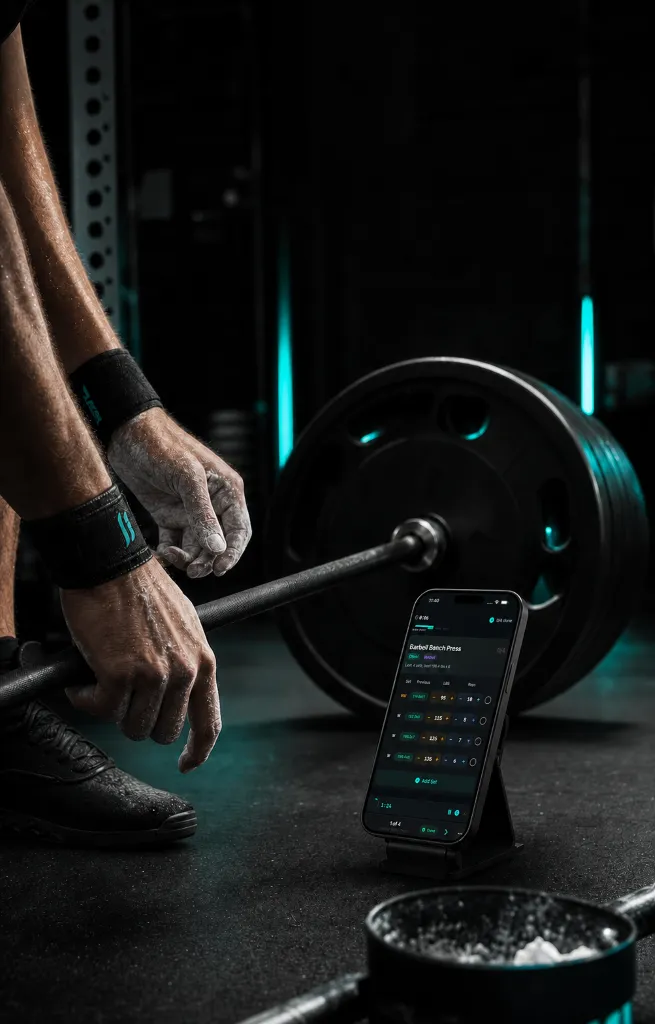
Workout logging is the process of recording enough training data to improve your next session, not just archive what happened. A useful log tells lifters what they did, how hard it was, whether performance is trending up, and what to change next.
A bad workout log becomes a graveyard of numbers. You record every warmup, every pump note, every random feeling, and every lifestyle variable until the habit collapses. More data does not automatically create better training. Better decisions create better training.
The purpose of your log is not to prove that you worked hard. The purpose is to help you adjust load, reps, volume, rest, exercise selection, and recovery before your progress stalls. If a metric does not change a decision, it probably does not need to be tracked every session.
For most lifters, the minimum useful log is simple: exercise, sets, reps, load, effort, and one short note when something meaningful happens. That is enough to spot progress, fatigue, plateaus, and recovery issues without spending half your workout typing.
Your log is not an archive. It is a decision system. The goal is to capture the few signals that help you train harder when the trend is good, pull back when fatigue is winning, and stay consistent when life gets messy.
1 system
Your log should support decisions, not collect random numbers.
5 fields
Exercise, sets×reps×load, effort, and one useful note.
Next session
The most useful log changes what you do next.
Why Do Most Workout Logs Fail?
Most workout logs fail because they create friction without creating clarity. You either track too little to see a pattern or track so much that logging starts to feel like a second workout.
The first failure mode is under-logging. You write down the exercise name and maybe the top set, but you leave out the load, reps, effort, rest, and context. Two weeks later, you cannot tell whether you are getting stronger, repeating the same work, or slowly drifting backward.
The second failure mode is over-logging. You track every sensation, every readiness score, every sleep detail, every pump rating, and every tiny variation in the session. That can feel serious, but it often creates noise. When everything matters, nothing is clear.
The third failure mode is emotional logging. One bad workout becomes proof that the plan is broken. One great workout becomes permission to add too much volume. A useful log protects you from both mistakes by forcing you to look at trends instead of reacting to single sessions.
Your training data should lower anxiety, not raise it. When the log is simple, you can stay consistent. When the log is consistent, you can compare. When you can compare, you can make better decisions.
Too much
Over-logging creates friction and makes consistency harder.
Too little
Under-logging makes trends impossible to read.
Trends
Judge progress across sessions, not one workout.
What Workout Data Should You Track?
You should track the smallest set of workout data that explains performance: exercise, sets, reps, load, effort, rest, and a short note when context matters. These fields tell you what happened, how hard it was, and whether the same work is getting easier or harder.
Start with exercise name because comparison only works when the movement is clear. A barbell back squat, safety bar squat, hack squat, and leg press are not interchangeable signals. They can all train your legs, but they should not be treated as the same performance trend.
Next, track sets, reps, and load together. Load without reps is incomplete. Reps without load are incomplete. Sets without context are incomplete. The useful unit is the full prescription: 4×8 @ 100kg, 3×5 @ 225lb, or 2×12 @ 60lb.
Then track effort with RPE or reps in reserve. Effort explains why the same weight can mean different things on different days. If 100kg for 8 reps moved from RPE 9 to RPE 7 over several weeks, you are not just repeating the same workout. You are building capacity.
Finally, track rest and one short note when needed. Rest helps explain performance changes between hard sets. Notes should be reserved for useful context: poor sleep, unusual joint pain, missed meals, equipment changes, travel, or a technical cue that changed the lift.
5-7
Exercise, sets, reps, load, effort, rest, and context when needed.
RPE 1-10
Use effort to explain how hard the work actually felt.
1 line
Keep notes short enough to use during a real workout.
How Often Should You Review Your Workout Log?
You should review your workout log once per week. Daily logging captures the session, but weekly review turns that data into a training decision.
A good weekly review does not need to be complicated. Look at your key lifts, weekly set volume by muscle group, effort trends, bodyweight trend if relevant, and any repeated notes about pain, poor recovery, or missed work. You are looking for patterns, not perfection.
Start with performance. Ask whether your top sets, working sets, or rep quality improved over the last 2-4 exposures. If load is up, reps are up, or the same work feels easier, the plan is probably moving in the right direction.
Then check stress. If every hard set is creeping toward RPE 9-10, rest times are stretching, reps are falling, and soreness is lasting longer than normal, your log is warning you before the crash. That does not mean you failed. It means the next adjustment matters.
Finish by choosing one change for the next week. Add load, add reps, hold the same prescription, reduce volume, change exercise order, extend rest, or plan a deload. One clear adjustment beats five emotional guesses.
7 days
A weekly review is frequent enough to adjust without overreacting.
2-4 exposures
Compare repeated lifts across multiple sessions before changing the plan.
1 change
Change one training lever at a time so feedback stays clear.
What Should Your Workout Log Change?
Your workout log should change your next training decision. The most common adjustments are load, reps, sets, rest, exercise order, exercise selection, and deload timing.
If performance is improving and effort is stable, you can usually progress. That may mean adding 2.5-5lb, adding 1 rep per set, adding one back-off set, or repeating the same work with cleaner technique. Progress does not always require a big jump.
If performance is flat but effort is reasonable, hold steady before you panic. A plateau across one workout is not a plateau. Repeat the prescription, clean up execution, and look for the trend across the next few exposures.
If performance is dropping and effort is rising, reduce stress. That could mean cutting 1-2 sets, lowering the load, extending rest, moving a demanding exercise later in the week, or swapping a high-fatigue movement for a more recoverable one.
If pain or technique breakdown repeats, change the setup before you chase more load. Your log should show whether a problem is a one-off bad day or a recurring pattern. Recurring patterns deserve a programming change.
2.5-5lb
Small load increases are often enough for upper-body and technical lifts.
1-2 sets
Small set changes are easier to evaluate than major program rewrites.
1 lever
Adjust one variable before changing the whole plan.
How Do You Track Volume, Intensity, and Effort?
Track volume with hard sets, intensity with load, and effort with RPE or reps in reserve. These three signals explain most of what you need to know about strength and hypertrophy training.
Volume tells you how much work a muscle or lift is receiving. A simple starting point is weekly hard sets per muscle group or key movement pattern. If your chest, quads, back, or glutes are not progressing, your log should show whether the issue is too little stimulus, too much fatigue, or poor execution.
Intensity tells you how heavy the work is relative to your current ability. For strength-focused work, intensity matters because heavier loads train skill, bracing, bar path, and force production under meaningful demand. For hypertrophy, intensity still matters, but the target is usually enough load and effort to create high-quality hard sets.
Effort tells you how close the set was to failure. This is where RPE and reps in reserve become useful. Two lifters can do 8 reps with the same weight, but if one had 4 reps left and the other had none, the training signal is not the same.
The best log combines all three. Volume without effort can hide junk sets. Intensity without reps can hide incomplete work. Effort without load can hide whether you are actually getting stronger. Together, they give you a clear picture.
10+ sets
Many hypertrophy frameworks use 10 or more hard sets per muscle group per week as a useful benchmark.
RPE 7-9
Most hard working sets live near challenging effort without needing constant failure.
60s+
Rest long enough to keep set quality from collapsing.
What Should You Not Track in a Workout Log?
Do not track metrics that do not change your training decisions. Your log should be useful under real conditions, not perfect under imaginary conditions.
You probably do not need to track pump quality every session. A pump can feel motivating, but it is not a reliable standalone measure of progress. If the muscle is growing, strength is trending up, photos are improving, or measurements are moving, you do not need a pump score to validate the session.
You also do not need to overreact to soreness. Soreness can happen from novel movements, long eccentrics, higher volume, poor recovery, or a hard session after time off. It does not automatically mean the workout was productive, and no soreness does not automatically mean the workout failed.
Avoid turning lifestyle tracking into a guilt loop. Sleep, stress, nutrition, hydration, and schedule all matter, but you only need to log them when they explain performance. A short note like poor sleep or travel week is often more useful than a complicated readiness ritual you will abandon.
The cleanest log captures what you did, how hard it was, and what changed. Everything else has to earn its place.
Optional
Useful for personal notes, not required for weekly decisions.
Context
Use soreness as one clue, not a full progress metric.
When needed
Track lifestyle context when it explains performance.
Workout Logging FAQ: Common Questions, Direct Answers
What should you log in every workout?
The minimum effective data for a strength session is: exercise name, sets completed, reps per set, weight used, and RPE for working sets. That is it. Everything else — rest periods, notes, tempo, exercise order — is useful context but not required to generate actionable trend data. If you have been skipping the log because it felt like too much, start with just those five fields and you will have more useful information than most lifters ever collect.
What data should you stop tracking?
Stop tracking anything you record but never review. Common culprits: bodyweight measured inconsistently at different times of day, RPE logged on every warmup set, exercise notes that just say 'felt good', and heart rate data that never influences a training decision. The goal is a log you can act on, not a complete record of everything that happened. If a data point has never changed a decision, it is noise.
How far back should you look when reviewing your training log?
It depends on what you are trying to learn. For day-to-day decisions (how much to lift today), look back 1 to 2 sessions. For weekly planning (is volume appropriate, should intensity change), look back 2 to 4 weeks. For program evaluation (is this block working), look back 6 to 8 weeks. For identifying long-term patterns (seasonality, injury cycles, progress rate), look back 3 to 6 months. Most lifters only ever look back one session — which is why they miss the trends that would actually change their training.
Is paper logging or app logging better?
The one you will actually use consistently. Paper logging has lower friction to start and no battery required. App logging enables trend calculation, e1RM estimates, volume tracking by muscle group, and searchable history — all of which are impractical to compute from a paper notebook. For lifters who want to use their data to make decisions (not just record it), an app wins. For lifters who just want to remember what they did last session, paper is fine.
How do you know if your training is actually working from your log?
Look for three trends over a 6 to 8 week window: (1) e1RM on main lifts trending upward — even small, consistent increases add up; (2) RPE at the same loads trending downward — the same weight becoming easier is adaptation; (3) session consistency rate above 80 to 85% of planned sessions completed. If all three are positive, the program is working. If any one is negative, investigate that variable before changing the program.
Should you log cardio and nutrition in the same place as your strength training?
Ideally yes, or at minimum have a way to correlate them. The most useful insight a log produces is the relationship between variables — how does your sleep quality affect your RPE? How does your protein intake track with your e1RM trend? How does cardio volume affect your strength performance that week? If all these data points are in separate places and never reviewed together, you are missing the most valuable part of long-term tracking.
What Is the Bottom Line on Workout Logging?
The best workout log is simple enough to use every week and specific enough to guide your next decision. Lifters do not need a perfect data system; they need a repeatable one.
Track exercise, sets, reps, load, effort, rest, and short context notes. Review the trend once per week. Adjust one training lever at a time. That alone puts you ahead of most lifters who either guess their way through training or bury themselves in numbers they never use.
When your log is working, your decisions get calmer. You stop changing the plan because of one bad day. You stop adding volume just because you feel motivated. You stop ignoring fatigue until it becomes a forced break.
SuperFlex is built around that idea: log the work, read the trend, and adjust with purpose. Your data should help you train with more confidence, not more confusion.
Training data is not medical advice. If pain is sharp, persistent, worsening, or changing how you move, do not try to solve it with a spreadsheet. Pull back, get qualified help, and protect the long game.
Log every set
Simple, consistent logging beats occasional perfect tracking.
Weekly
Review often enough to adjust before problems compound.
Better decisions
The log exists to improve the next workout.