Weekly volume by muscle, not by day
Hypertrophy responds to sets per week per muscle group — not 'how hard chest day felt.' You need a number per muscle you can compare against MEV/MAV/MRV targets.
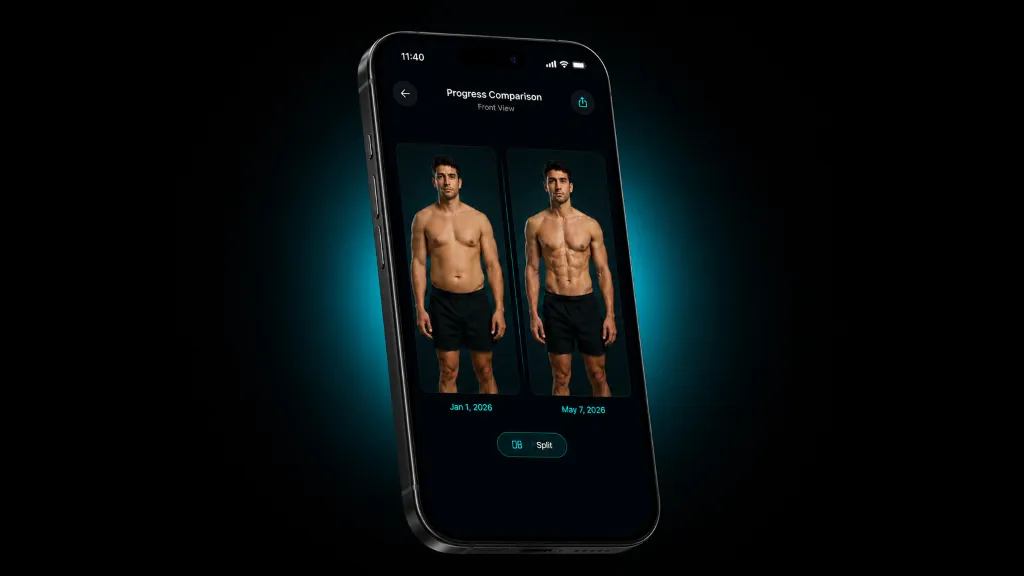
Hypertrophy is volume plus recovery plus consistency. SuperFlex tracks weekly volume per muscle group, fatigue across 14 anatomy regions, and physique change through guided progress photos.
Who this is for
Bodybuilding is a multi-year project. You're not chasing a one-rep max — you're chasing a physique that looks different in twelve months. That means tracking volume across muscle groups, watching how recovery spreads through the week, and keeping a visual record honest enough to hold up to your own scrutiny.
SuperFlex's tools are built around that arc. The recovery tracker uses a 14-region anatomy taxonomy — granular enough to distinguish a rear-delt-heavy pull from a lat-heavy pull. The progress photo flow makes a monthly check-in something you'll actually do. The volume metrics show you which body parts are quietly under-trained before they become a six-month plateau.
What you need
Hypertrophy responds to sets per week per muscle group — not 'how hard chest day felt.' You need a number per muscle you can compare against MEV/MAV/MRV targets.
Eight weeks of work changes the body in ways the mirror doesn't show day-to-day. You need a consistent photo timeline you can actually keep up with.
When chest is wrecked but lats are fresh, the program should adapt. Pulling everything back because one body part is cooked is wasted volume on the others.
Hypertrophy isn't pure weight — it's reps in reserve, time under tension, working set quality. An app that only logs weight × reps is missing half the signal.
Bodybuilding is a four-year project at minimum. You need an app that doesn't cap your history at 3 months or hide your earlier data behind a paywall later.
A week with SuperFlex
Tap your push template. SuperFlex shows last week's working sets pre-filled — incline DB press at 70lb × 10 last week, you bump to 72.5lb. You log RPE 8 across four working sets, hit triceps with two supersets, save the workout.
Home dashboard shows chest and front delts Fatigued, lats Fresh, biceps Fresh. You run pull day at full intensity without worrying about overlapping fatigue. Per-muscle volume updates as you save.
Heavy compound leg work, then unilateral split squats — per-limb logging captures the left leg trailing by two reps. You note the asymmetry and add an extra set to the weak side. The recovery tracker updates quads, hamstrings, and glutes.
Open Progress, tap a new entry. SuperFlex shows last month's front shot as a faded overlay in the camera. You line up the angle, snap front/side/back, log your morning weight from HealthKit. The comparison view confirms what you suspected — shoulders are filling out.
Same template, different emphasis. SuperFlex tracks volume per muscle separately for the two push days, so you can see your weekly shoulder sets vs. weekly chest sets and adjust if one is creeping too high or too low.
Features that matter most
Why not just use a spreadsheet
Volume math is easy enough to do in Numbers if you stay disciplined. The part that breaks down is the photo protocol — different lighting, different angles, different rooms, different weeks where you forgot entirely. By the time you'd want to look back, you have three photos in six months and they don't line up. SuperFlex's guided overlay fixes that by making consistency the default.
FAQ
SuperFlex is available now on iPhone. Download free and unlock Pro in-app for guided progress photos and deeper analytics.
Download on the App Store