Trustworthy strength trend
You can't make programming calls on noisy daily numbers. You need an estimated 1RM curve per lift that smooths out the bad days and shows you the actual slope.
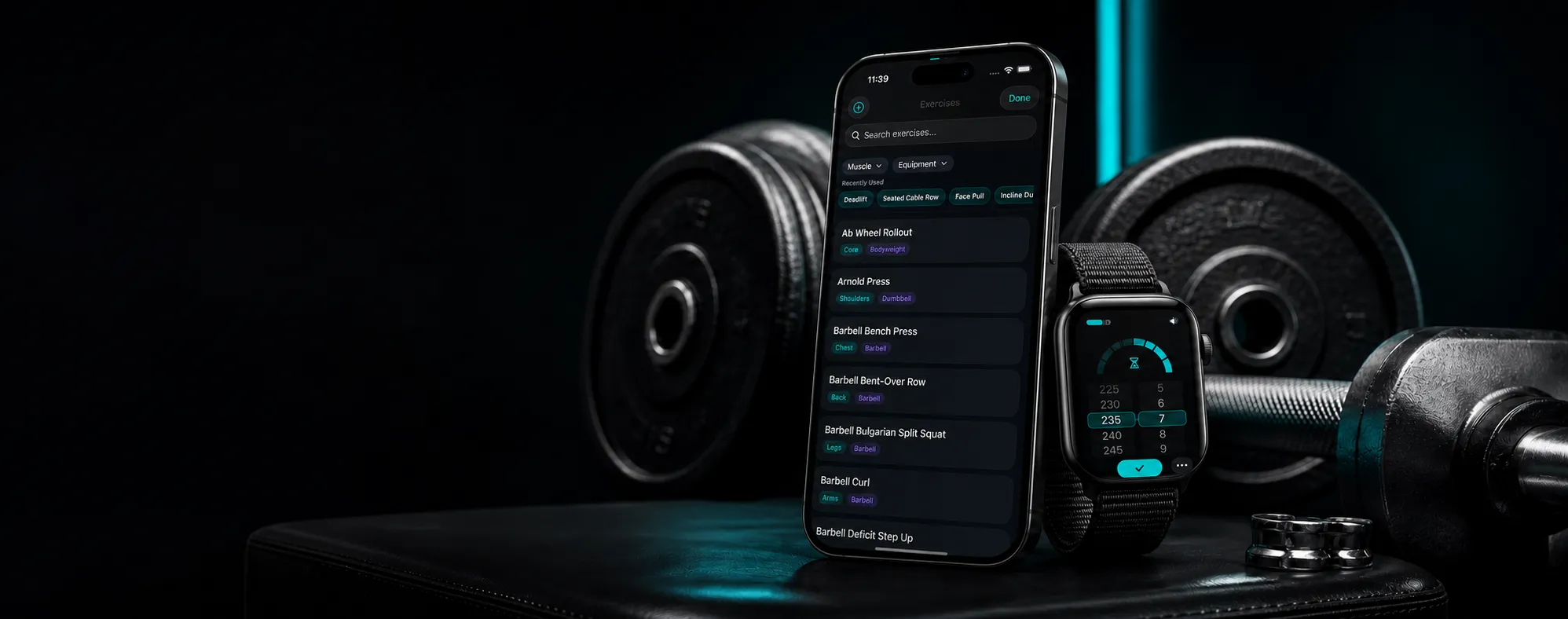
You measure progress in kilos and you don't care about a social feed. SuperFlex is built for the way strength athletes actually train — RPE in two taps, per-lift 1RM trends from every working set, and a recovery model that respects what a heavy squat day costs.
Who this is for
You're not training for the feed. You're training for a competition lift, a personal record, or just the private satisfaction of watching your numbers climb. The app you log in shouldn't be making decisions about what you see — it should be making your data more useful.
SuperFlex doesn't have a community feed, doesn't push athlete content at you, and doesn't suggest workouts that ignore what you actually trained yesterday. It logs fast, charts honestly, and stays out of your way.
What you need
You can't make programming calls on noisy daily numbers. You need an estimated 1RM curve per lift that smooths out the bad days and shows you the actual slope.
An RPE field that takes ten seconds to find isn't an RPE field that gets used. Logging RPE 8 on a top single should be a single tap, not a menu dive.
Single-leg work, one-arm rows, split squats — they make the difference between a lift that grows and one that stagnates. Most apps force you to fake them as bilateral.
A heavy squat day cooks more than legs. You need to know whether your low back and glutes are still cooked before you press Tuesday, not find out under the bar.
Years of meet prep, weight cuts, and peak cycles. The thought of that data being held by an app's social feed or held hostage by a paywall is a non-starter.
A week with SuperFlex
An honest week of strength work — log, train, recover, repeat.
You walk in, tap Squat Day from your templates, and SuperFlex pre-fills last week's working sets. You hit your top set at RPE 8 — log it from the watch, the rest timer fires, you confirm. The 1RM chart redraws the moment you save.
Recovery dashboard shows quads Recovering, hamstrings Fatigued, chest and shoulders Fresh. You run your overhead press with single-arm dumbbell work — per-limb tracking captures the right arm being 5lb behind the left, and you flag it.
Recovery tracker still shows lower body cooking. Your watch's activity rings count yesterday correctly. You take the day. The data backs the decision.
Pull singles up to a top RPE 8. SuperFlex's estimated 1RM curve for deadlift now shows three weeks of upward slope. The progression engine suggests +5lb next Thursday based on your last two sessions at target reps.
Hypertrophy day. Eight-rep sets, RPE 7-8, supersets between bench and rows to save time. SuperFlex tracks the volume per muscle group so you can see whether you're under, at, or over weekly target.
Features that matter most
Why not just use a notebook
A notebook captures the past. A spreadsheet, if you're disciplined enough to update it, captures the present. Neither shows you the slope — and the slope is what tells you whether you're actually getting stronger or just maintaining. SuperFlex runs that math continuously, on every set, so the trend is visible without any extra work from you.
FAQ
SuperFlex is available now on iPhone. Download free and train with cleaner strength signals from day one.
Download on the App Store